
Most toilet leaks are discovered late, and the reason is simple: the leak is silent, the toilet works, and nothing in the bathroom looks wrong. But one witness has been watching the whole time. Your water bill records every gallon the house used, including the gallons nobody meant to use. Read the right way, the bill is a leak detector you already own. This page shows how to read it: what the units mean, which comparisons are fair, and what a creeping bill usually turns out to be.
First, the unit: what an HCF is
Fountain Valley bills water by the HCF, which is one hundred cubic feet, or 748 gallons. The price is $4.36 per HCF. That single fact turns the bill into a leak measuring tool, because it lets you convert a change in usage into water and money. One extra HCF on a bill is 748 extra gallons, costing $4.36. A bill that has crept up by four HCF in a cycle is describing nearly 3,000 extra gallons that went somewhere. Lawns and guests explain some jumps. A steady creep, month after month, in a house whose life has not changed, is asking a question. The wider local billing picture, including why the sewer charge does not move with a leak, is on Fountain Valley Water Facts.
Compare like with like
How much does a leaking toilet add to a bill?
At $4.36 per HCF, a typical running toilet at about 200 gallons a day adds around $70 across a two month cycle. A slow seep adds roughly half that, and a toilet passing 400 gallons a day adds roughly double.
My bill jumped in summer. Is that a leak?
Not on its own. Summer watering lifts honest bills. The test is whether the higher usage falls back when the season ends, and whether this summer matches last summer. A leak shows as a rise that never comes back down.
Water use has seasons. Summer irrigation pushes a Fountain Valley bill up honestly, and comparing July with January will frighten anyone. The fair comparisons are these. Compare this cycle with the same cycle last year, when the household was living the same life. And compare the winter cycles with each other, because winter is when outdoor use falls away and the indoor baseline shows itself. A toilet leak does not take the summer off: it appears in every cycle as a floor that has risen and does not come back down. A rise that survives into the low season is the signature to take seriously.
The leak maths, at bill scale
A typical running toilet wastes about 200 gallons a day. Across a two month billing cycle that is roughly 12,000 gallons, about 16 HCF, and around $70 added to that cycle's water charges. A slower flapper seep, around 100 gallons a day, still adds roughly $35 across a cycle, and a bad one at 400 gallons a day adds about $70 a month, roughly double that across the cycle. These numbers explain the common story: the bill did not explode, it crept, by an amount easy to blame on the garden or the weather. The silent version of this leak, the kind with no sound at all, is described on Can a Toilet Leak Silently?.
The meter as the second witness
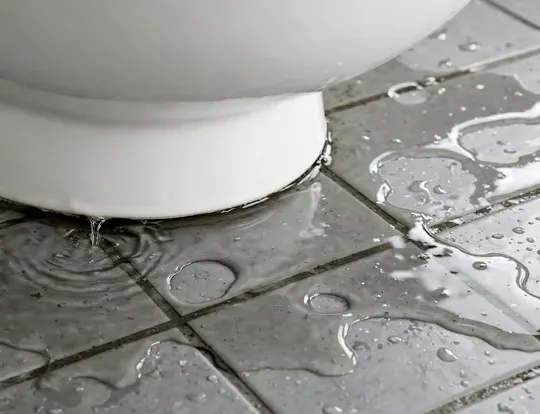
The bill tells you about the past two months. The meter can tell you about tonight. A water meter that moves when every tap in the house is off and nobody has flushed is watching water go somewhere, and in most homes the toilet is the first place to look, because it is the only fixture that can pass large amounts of water without showing it.
What a technician does with a suspicious bill
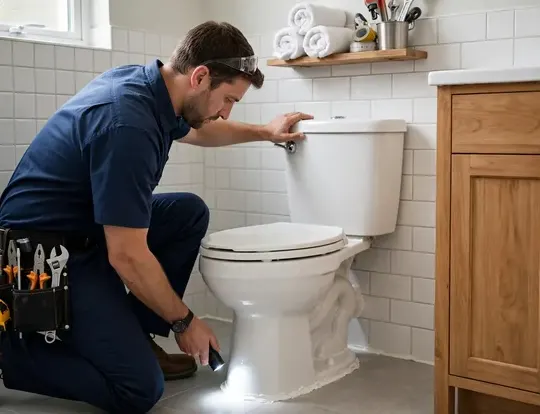
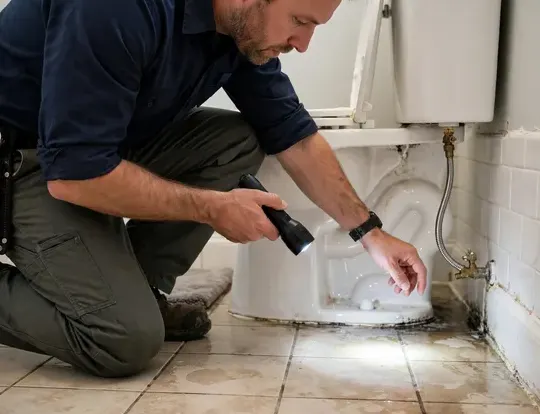
The bill points, and then the toilets are tested. The dye test proves or clears each toilet in minutes: colour in the tank, time allowed to pass, and the bowl checked for colour that should not be there. In a two bathroom home it is common for one toilet to be passing water and the other to be innocent, and the test names which. The part at fault, most often the flapper, is replaced, and the next bill becomes the confirmation: the creep disappears in the following cycle. If your bill has crept up and stayed up, call Toilet Repair Fountain Valley at +1 (657) 359-9352. Open 24/7.
Related pages
Frequently asked questions
Why did my sewer charge not rise with the leak?
Because in this area sewer is billed as a flat yearly fee on the property tax bill rather than by the gallon. The leak only inflates the water side, which is exactly why it hides: half the bill never moves.
How soon after a repair should the bill drop?
The first full billing cycle after the repair should show the usage back at its old level. A partial cycle may still contain pre repair days, so judge by the first clean cycle.