This is the second most asked question in the trade, right after cost, and it gets a lazy answer in most places: a toilet's age, as if the number alone decides. Age matters, but not the way the slogans say. A toilet is really two things with two different lifespans bolted together. The porcelain can serve for fifty years. The working parts inside it, the flapper, fill valve, flush valve, seals, and bolts, wear out in years, not decades. Most repair or replace decisions settle once you see which of the two you are actually dealing with.
This page works through the decision the way a technician does: porcelain first, then the pattern of failures, then the water maths, because in Fountain Valley the water maths has real numbers in it.
Want the decision made on your toilet, in your bathroom? Call +1 (657) 359-9352. Open 24/7.
Rule one: cracked porcelain ends the argument
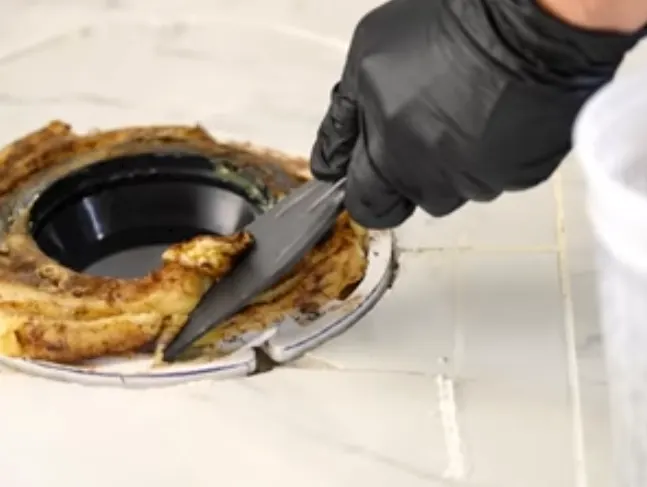
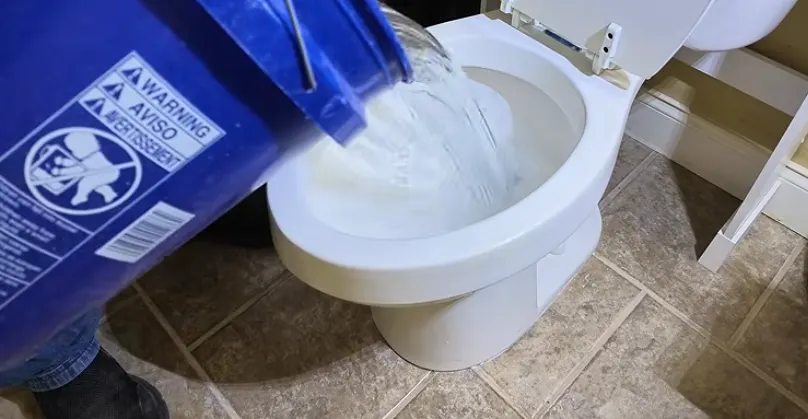
If the bowl or tank is cracked, replace the toilet. Porcelain cannot be patched in any way that holds under use, and a crack leaks where you cannot seal it. The proof is a dye check: colour placed in the bowl water seeps through the porcelain itself when the bowl is cracked. A hairline crack near the base can also be the true source of a leak blamed on the wax ring. Everything else on this page is a judgement call. This one is not.
Rule two: count the failures, not just the years
Should a 20 year old toilet be replaced?
Not on age alone. A 20 year old toilet is likely a low-volume model with sound porcelain, and a failed part on it is a repair. Replace it if the porcelain is cracked, if parts keep failing in a pattern, or if it clogs weekly from a roughened trapway.
Should I replace a 30 year old toilet?
A 30 year old toilet may be a pre-1994 model using 3.5 gallons or more per flush, depending on its exact year. If it is, the water savings argue for replacement even while it still works. If it flushes well, holds its seals, and takes modern parts, age alone still does not force the decision.
A single failed part on a sound toilet is a repair, at almost any age. A flapper at ten years, a fill valve at fifteen: normal wear, cheap lesson. The pattern that argues for replacement is repetition. The same toilet needing a third tank part in a couple of years is telling you the whole system is at the same age and condition, and a full tank rebuild or a new toilet beats a drip feed of call-outs. Add a second signal to the pattern: clogs. A toilet that clogs weekly with normal use, where the trapway has roughened with decades of scale, has a porcelain problem wearing a plumbing disguise. No tank part fixes a rough trapway.
Rule three: age by era, not by birthday
The questions people ask are about 20 and 30 year old toilets, and the honest answer is that the era matters more than the count.
- Pre-1994 toilets use 3.5 to 7 gallons per flush. These are the oldest era still common in Fountain Valley's 1960s and 1970s homes. Every other factor being equal, this era argues for replacement, because the water savings are large and the parts are the oldest.
- 1994 to the California standard era brought lower volumes, and toilets built since the state standard of 1.28 gallons per flush took effect in 2014 use water at the modern rate. A sound toilet from this era with a failed part is a repair, comfortably.
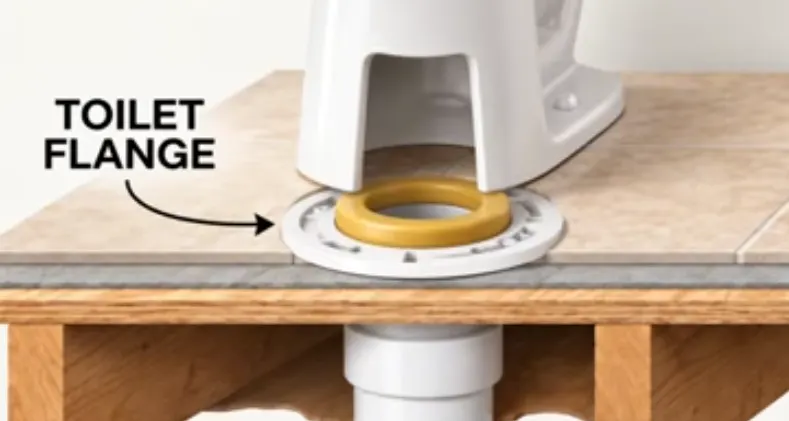
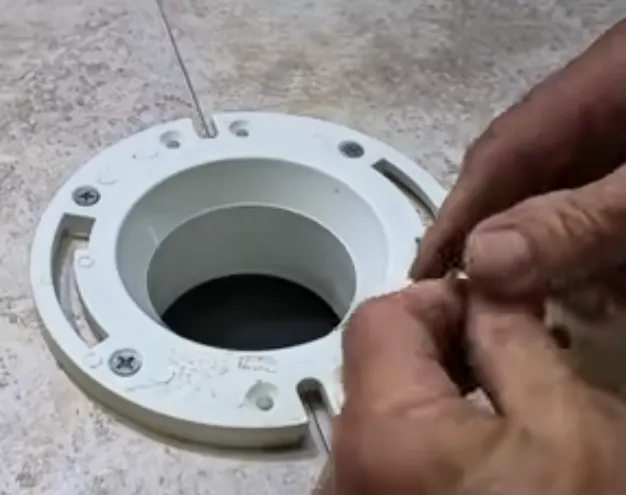
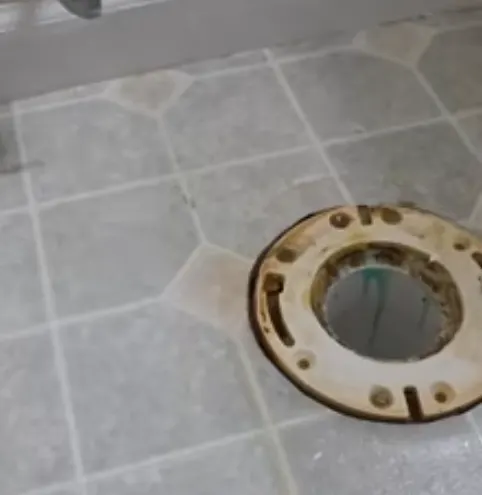
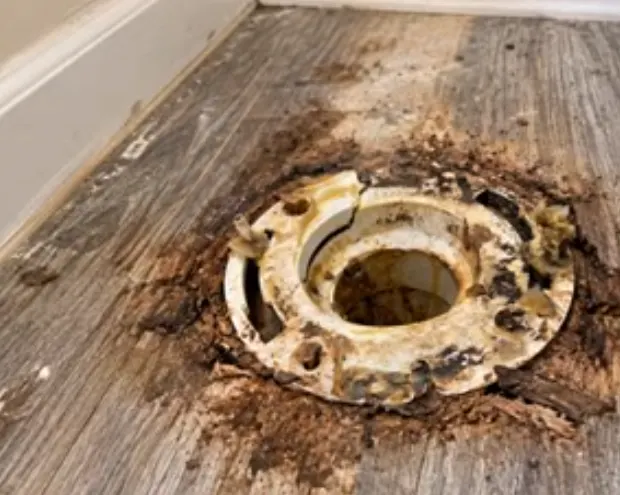
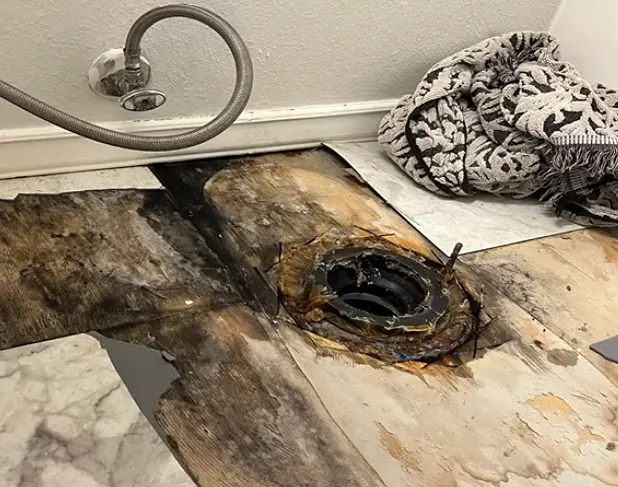
- Any era with cracked porcelain, a failed flange and floor story repeating, or a trapway rough with scale argues for replacement on condition, not date.
The water maths of replacing an old toilet
Each flush of a 3.5 gallon toilet replaced by a 1.28 gallon model saves about 2.2 gallons. That saving happens at every flush, every day, for the life of the toilet, at $4.36 per HCF of 748 gallons. The older and thirstier the toilet, the faster a replacement pays its way in water alone. A premium high-efficiency toilet at 1.1 gallons per flush or less saves more again, and it currently carries a rebate: SoCal Water$mart offers $40 when a premium toilet at 1.1 gallons per flush or less replaces one using 1.6 gallons or more. Ask the technician to leave you the model details you need for the claim.
There is a second water figure to weigh if your old toilet also runs or leaks. A leaking flapper at about 200 gallons a day costs roughly $35 a month in water. Replacing the toilet ends that too, though in fairness a new flapper ends it for far less, which is why the leak alone is a repair argument and the leak plus era plus repeat failures is a replacement argument. The full cost workings are on What a Running Toilet Is Costing You, Worked Out Properly.
While you are deciding: shape and height
Replacement is the one moment you get to change two things repairs cannot: the shape of the bowl and the height of the seat. Round bowls save space in small bathrooms. Elongated bowls give more room and are the more comfortable fit for most adults, and they need the space to match, so measure the rough-in and the room before choosing: the standard rough-in is 12 inches from the wall. Comfort height seats, at roughly chair height and in line with ADA guidance, are easier to sit down on and stand up from, which is why PAA questions about seniors and toilets keep circling back to height. If anyone in the home has knees or hips that argue with a low toilet, replacement is the time to fix that for good. Ask for the brand and model details to be left with you after any installation, since those details drive parts and rebate claims later.
The decision in one list
Repair when: the porcelain is sound; the fault is one named part; the toilet is from the low-volume era or flushes well; the flange and floor are solid; the failure is the first in a long while.
Replace when: the porcelain is cracked; parts have failed in a repeating pattern; the toilet is a pre-1994 high-volume model; the trapway clogs weekly from scale roughness; the bathroom is being remodelled anyway and the toilet is the oldest thing in it; or the household needs a different bowl shape or seat height.
Rebuild as the middle path: a full tank rebuild replaces every moving part in the tank in one visit: fill valve, flush valve, flapper, and handle. On a sound toilet from a middle era, it resets the parts clock to zero without touching the porcelain, and it often settles this whole question for years. Ask about it by name.
Related pages: Toilet Repair Cost in Fountain Valley: What You Are Really Paying For What a Running Toilet Is Costing You, Worked Out Properly New Toilet Installation and Replacement in Fountain Valley Plumber or Handyman? Who Should Actually Fix Your Toilet
Get the decision made on your toilet
Bring the symptom and the age of the toilet, and the call does the rest: tests, an honest read on the porcelain and the parts, and a recommendation that follows the rules on this page.
Call +1 (657) 359-9352: open 24/7. Toilet Repair Fountain Valley, 18440 Amistad St, Fountain Valley, CA 92708.
Toilet Repair Fountain Valley is a referral service that connects homeowners with local toilet repair technicians. Calls may be recorded for quality and routing.
Related pages
Frequently asked questions
How many years should a toilet last?
The porcelain can last 50 years or more. The parts inside cannot: flappers last a few years in hard water, fill valves and flush valves longer, wax rings as long as the toilet stays still. Expect to renew parts several times across a toilet's life. That is maintenance, not failure.
Can a toilet last 50 years?
The bowl and tank can, yes, and some in Fountain Valley's older homes are well on their way. What a 50 year old toilet cannot do is flush at modern water rates or take every modern part. Lasting and being worth keeping are two different questions.
How to tell when a toilet needs replacing?
Watch for a crack anywhere in the porcelain, a weekly clog pattern, repeat tank failures, a base that cannot be made stable because the flange or floor keeps failing, or water use from another era. Any one of the first three settles it. See the decision list on this page.
Is a round or elongated toilet better for seniors?
Height usually matters more than shape for older users. A comfort height seat is easier to sit on and stand from, and an elongated bowl gives more support and room. Round bowls suit small bathrooms. If the toilet is being replaced anyway, comfort height elongated is the combination most households choose for ageing in place.