The median Fountain Valley home was built in 1972, and most of the city's housing went up in the 1960s and 1970s. Plenty of those homes have had a bathroom refresh since. Plenty have not, and some still run a toilet that has been flushing since the house was young. Age does not make a toilet fail on a schedule, but it loads the dice in specific ways. These are the problems that belong to older Fountain Valley homes, and the thinking that separates a sensible repair from good money after bad.
The toilet itself is old
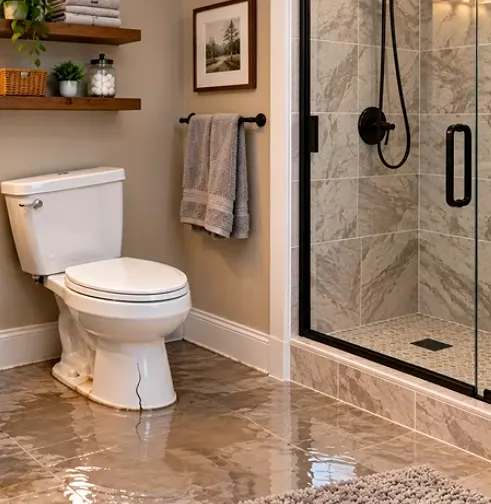
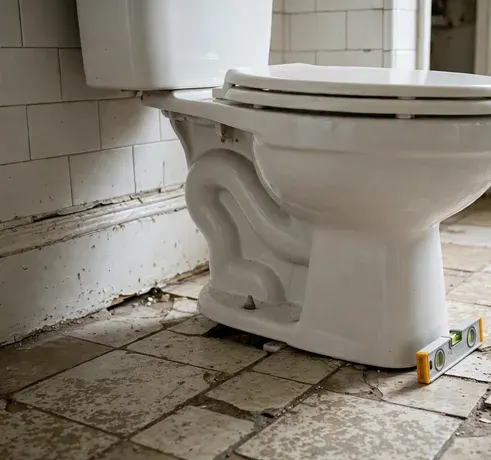
A toilet installed before 1994 uses 3.5 to 7 gallons per flush, against the current California standard of 1.28. That is not a fault, it is the design of its era, and it costs real money every day; the rebate and savings numbers are on Toilet Rebates and Water Saving. Inside an old toilet, the working parts are the same story as any toilet, flappers and fill valves wear, but two age problems are the porcelain's own. The glaze inside the trapway roughens over decades, so waste starts catching and clogs become a habit rather than an event. And fine cracks, called crazing, spread through the glaze. Surface crazing is cosmetic. A crack that grows, weeps, or reaches the base or tank wall ends the toilet's life.
The fittings under it are older still
How old is too old for a toilet?
There is no fixed year. Porcelain can serve for decades. The practical end comes with cracks, a worn trapway that clogs as a habit, or fittings underneath that can no longer hold a seal.
My 1970s toilet works fine. Should I change it anyway?
Working fine and costing money are different questions. At 3.5 gallons or more per flush, an old toilet in daily use costs roughly $95 a year more in water than a current model, and a $40 rebate applies to qualifying replacements. The decision is arithmetic, not urgency.
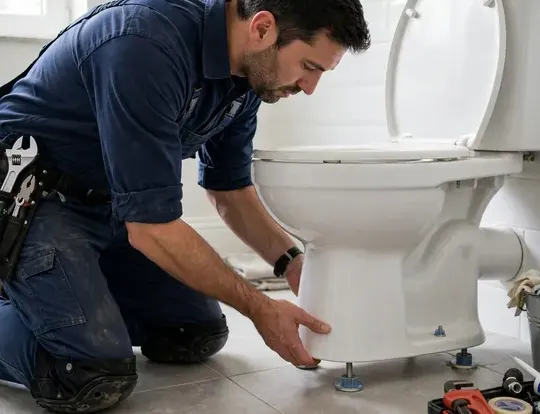
Every toilet problem that involves lifting the unit gets harder with age, because of what is underneath:
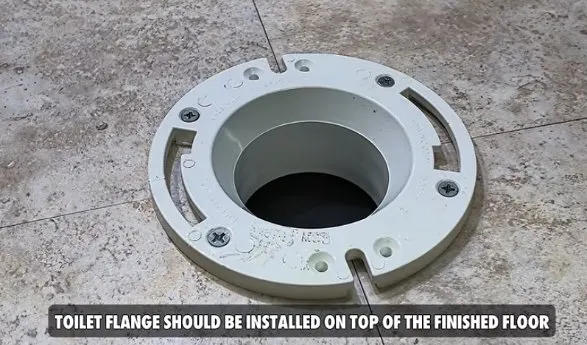
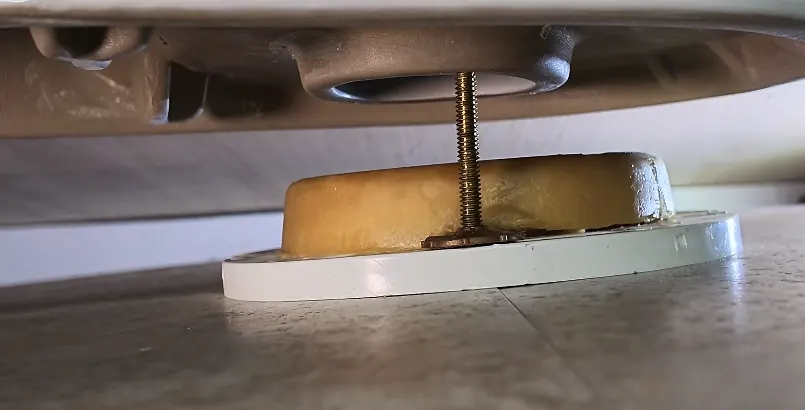
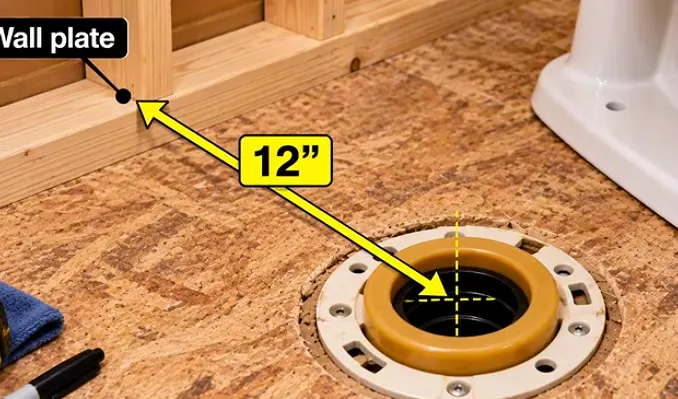
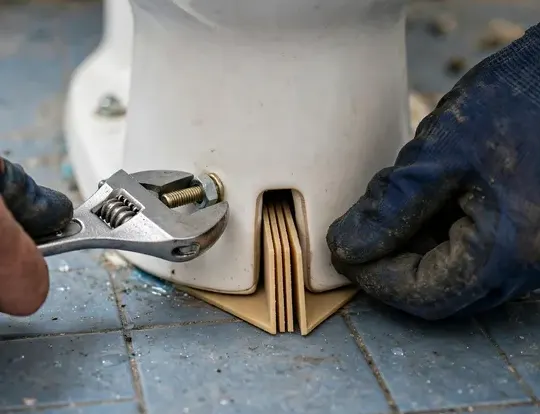
- Closet flanges corrode and crack. The flange on a 1970s install has held bolts and moisture for fifty years. A broken flange is the hidden reason an old toilet rocks and its base leak keeps coming back after a new wax ring.
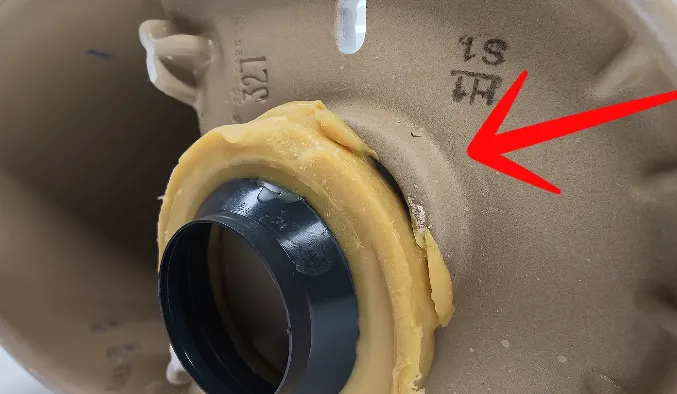
- Wax hardens and compresses. A decades-old wax ring no longer springs back. Small movements that a fresh seal absorbs become leaks.
- Floors take the history. Years of slow, unseen weeping rot the subfloor around the flange, so the toilet sits on soft ground and moves more, which breaks the next seal faster. This is the loop behind repeat base leaks, covered on Toilet Leaking at the Base.
- Shut-off valves seize. The little valve behind an old toilet may not have been turned in decades. The day it is needed, in an overflow, is the wrong day to discover it is frozen or weeping itself.
Hard water has had fifty years to work
Fountain Valley city water runs at 195 ppm hardness, about 11 grains. Scale builds inside rim jets and siphon jets a fraction at a time, and on a newer toilet the flush weakens slowly. On an old toilet the same build-up meets a trapway that is already rough, and the two together produce the classic older-home complaint: the toilet that used to flush fine now needs two flushes and a plunger nearby. The water side of the story is on Hard Water and Your Toilet.
Repair or replace, the older-home version
Age alone is not a reason to replace. A solid old toilet with a worn flapper deserves the small repair. The balance tips when the porcelain or the floor enters the story: a cracked tank or base, a trapway so worn that clogs are weekly, a flange and floor repair that has to be done anyway, or a 5-gallon flush in a house paying $4.36 per HCF. The general framework is on Repair or Replace Your Toilet? Here Is How to Decide. When an older toilet is lifted for any reason, the flange, bolts and floor get inspected as part of the job, because nobody wants to pay for the same lift twice.
If your Fountain Valley home is from the 1960s or 1970s and the toilet is showing its age, call Toilet Repair Fountain Valley at +1 (657) 359-9352. Open 24/7, and the price is confirmed before any work begins.
Related pages
Frequently asked questions
Why does my old toilet clog when it never used to?
Usually two things together: scale narrowing the rim and siphon jets so the flush starts weaker, and a trapway glaze worn rough so waste catches. Either alone is manageable. Together they turn clogging into a pattern.
The base leak came back after a new wax ring. Why?
On older installs the ring is often not the root cause. A corroded flange sitting too low, broken closet bolts, or a soft subfloor lets the toilet move, and movement breaks the new seal the same way it broke the old one.
Are parts still available for older toilets?
For common brands, yes, though some older flush mechanisms take different flappers and valves than current shelves stock first. A technician identifies the model and fits the part that matches it, rather than forcing a near fit.