
A toilet seat is the part you touch every day, and the toilet under it comes in more shapes than most people expect. Looks alone can lead to a seat that overhangs the bowl, a toilet that does not fit the wall, or a height that makes life harder for the person who uses it most. This guide covers shapes, heights, types, and the measurements that matter.
The measurement that decides the fit: the rough-in
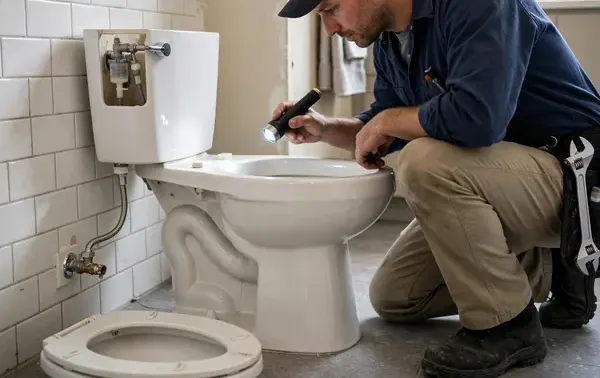
The rough-in is the distance from the wall behind the toilet to the centre of the closet bolts at the floor. 12 inches is the standard in most homes, including most Fountain Valley homes from the 1960s and 1970s. Some older or remodelled bathrooms measure 10 inches or 14 inches. A standard toilet fitted to a non-standard rough-in either crowds the wall or leaves a gap behind the tank. The measurement runs from the wall itself, not the skirting board, and in practice plumbers often work to about 11 inches from the trim face on a 12-inch rough-in. It is a two-minute measurement that saves returning a toilet.
A seat has its own deciding fact too: the bowl shape, covered next.
Round or elongated?
Are round and elongated seats interchangeable?
No. Each is shaped to its bowl. An elongated seat overhangs a round bowl, and a round seat leaves an elongated bowl partly bare. Match the seat to the bowl shape.
What is comfort height, and who is it for?
A bowl that puts the seat at about 17 to 19 inches instead of about 15. It suits taller people, older users, and anyone whose knees or hips make a low seat hard work. It is less suited to shorter users and small children.
- Round front. The bowl is close to round, and the seat is shorter front to back. Fits small bathrooms and powder rooms where door swing and leg room are tight.
- Elongated. The bowl is oval and a couple of inches longer. Most adults find it more comfortable, and it is the common choice in main bathrooms.
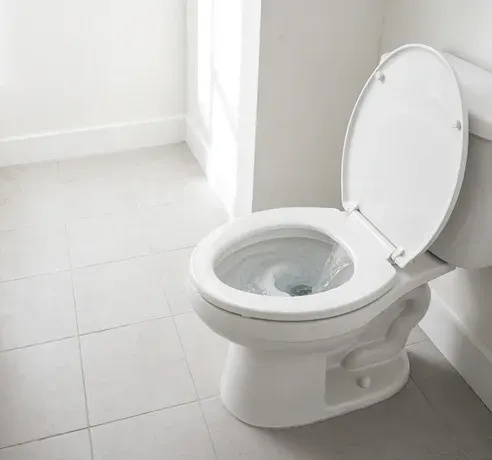
The two are not interchangeable. An elongated seat on a round bowl overhangs at the front and shifts under weight. A round seat on an elongated bowl leaves porcelain showing and feels wrong. A bowl that looks like a circle is round; one that looks like an egg stretched toward the front is elongated. The seat has to match the bowl shape.
Seat basics worth knowing
- Fixings. Seats fix through two bolt holes at the back. Bolt spread is standard on most toilets, but less common brands vary. Seat hinges are the part that loosens first; a seat that slides side to side usually points at its hinge bolts, not at the seat itself.
- Slow-close lids stop the slam and are kinder to porcelain and to small fingers.
- Materials. Plastic seats shrug off cleaning products. Moulded wood seats feel warmer and heavier but their finish wears in time.
- Bidet and smart seats add washing, and some add heat and a night light. They need a power outlet near the toilet for the heated models and a tee fitting on the supply line. Fitting one is a seat fitting plus a water connection, covered under our bidet seat work. See Toilet Parts and Repair Kits for the parts side.
Comfort height, and seniors
A standard toilet seat sits at about 15 inches from the floor. A comfort height toilet, sometimes sold as chair height, sits at about 17 to 19 inches, close to a normal chair. Those two inches make sitting down and standing up easier on knees and hips, which is why comfort height is the common pick for older homeowners, taller users, and anyone with a joint problem. In a city like Fountain Valley, where many owners bought in the 1970s and are now in their seventies and eighties, this is a regular part of replacement talks.
Comfort height is also the bowl height used for ADA-style toilets in homes. If a member of the household uses a wheelchair or a frame, height and grab bar space belong in the talk before anything is ordered. A taller bowl is not right for everyone: shorter adults and small children may find their feet leave the floor. Trying one in a showroom settles the question better than any measurement.
Toilet types
- Two-piece. Tank and bowl are separate and bolt together, with the tank-to-bowl gasket between them. The most common toilet in local homes, the easiest to repair, and the type most parts and kits are made for. The joint is also its weak point: tank bolts and the gasket are where back-of-bowl leaks start.
- One-piece. Tank and bowl are cast as one unit. No joint to leak, smooth sides that clean easily, and a higher price. Tank parts still wear, and some models use brand-only parts.
- Dual-flush. Two buttons or a two-stage handle: a small flush for liquid waste and a full flush for solid waste. A sound way to cut water use. Conversion kits can turn many standard flush valves into dual-flush, though button rods on kits sometimes need trimming to suit the tank.
- Wall-hung. The bowl hangs on a frame inside the wall and the tank hides in the wall. Frees floor space and makes mopping simple. Repair access is through the flush plate, and fitting one is building work, not a simple swap.
- Pressure-assist. A sealed vessel inside the tank flushes with pressure. Strong flush, more noise, and its own parts that universal kits do not hold.
Water use, briefly
California has required new toilets to use no more than 1.28 gallons per flush since 2014. Toilets made before 1994 often use 3.5 to 7 gallons per flush. In a Fountain Valley home on city water at $4.36 per HCF, that gap is real money over a year, and a premium high-efficiency toilet at 1.1 gallons per flush or less can qualify for the $40 SoCal Water$mart rebate when it replaces a toilet using 1.6 gallons or more. Full local figures: Fountain Valley Water Facts
What decides the right choice
Four facts settle a seat or toilet choice. The rough-in decides whether a toilet fits the wall. The bowl shape, round or elongated, decides the seat. The height is picked for the people who will use it daily, not for guests. And where parts are being matched to an existing toilet, the brand and year stamped inside the tank name what fits.
If a seat fitting turns into a rocking toilet, a flange problem, or a full replacement you would rather hand over, call Toilet Repair Fountain Valley at +1 (657) 359-9352. Open 24/7.
Related pages
Frequently asked questions
How do I measure my rough-in?
The rough-in is the distance from the wall behind the toilet to the centre of the closet bolts holding the toilet down. 12 inches is standard. It is taken to the wall itself, allowing for skirting and trim, and it is settled before a toilet is ordered.
Can I fit a bidet seat to my existing toilet?
Usually, yes, if the bowl shape matches and there is a supply line tee point. Heated models also need a power outlet nearby. The seat itself fits like a normal seat; the water connection is the extra work.
One-piece or two-piece: which should I buy?
Two-piece costs less, repairs with common parts, and is what most local homes have. One-piece has no tank joint to leak and cleans more easily, at a higher price and with more brand-specific parts. For most Fountain Valley replacements, two-piece remains the practical pick.