Most toilet faults live in a small group of parts. Learn the names and you can describe a problem on the phone in one sentence, and tell a simple parts swap apart from a bigger repair. This hub walks through the parts, the kits that hold them, and the point where a kit stops being the answer.
The tank, in plain words
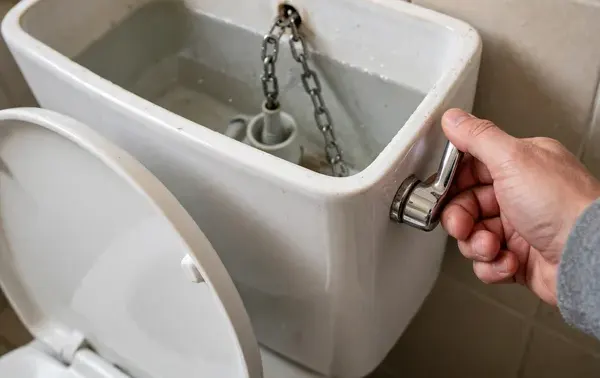
The tank lid is porcelain, and it breaks if it is dropped. Inside the tank sit five working parts:
- Fill valve. The tall unit on the left, fed by the supply line from the wall. It lets water in after a flush and stops it at the set level. A float rides on it or hangs from it. When the float reaches the line, the valve closes.
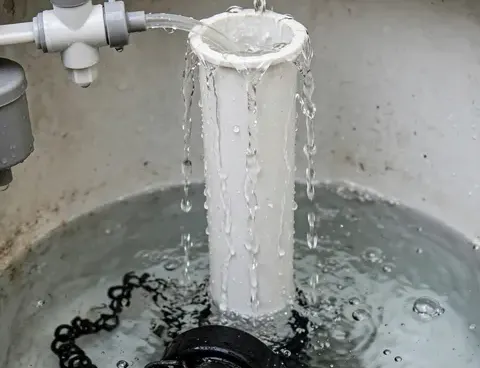
- Flush valve. The tower or opening in the middle of the tank floor. It holds the water back and lets it go in one rush when you flush.
- Flapper. The rubber or plastic cap that sits on the flush valve opening. The handle lifts it, water runs into the bowl, and the flapper settles back down to seal the tank. A worn flapper is the most common cause of a toilet that keeps running.
- Overflow tube. The open pipe standing in the tank. It sets the highest safe water level and sends extra water down into the bowl instead of onto your floor. A refill tube clips to it and tops up the bowl after each flush.
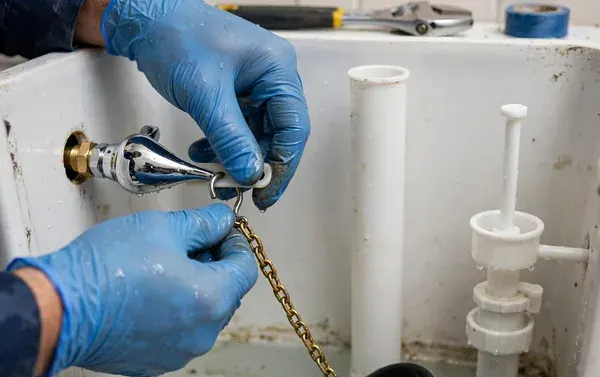
- Trip lever, handle and lift chain. The handle you press. It pulls a short chain that lifts the flapper. The nut that holds the handle is reverse threaded, so it turns the opposite way from a normal nut.
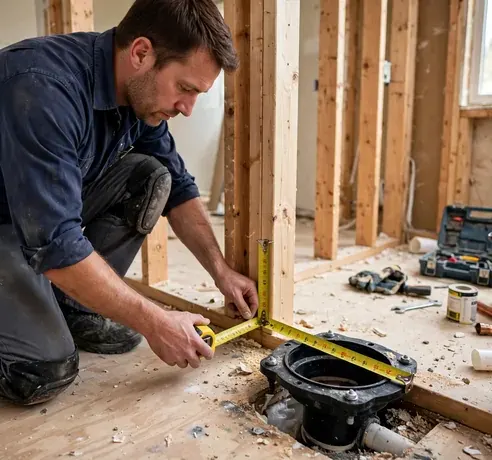
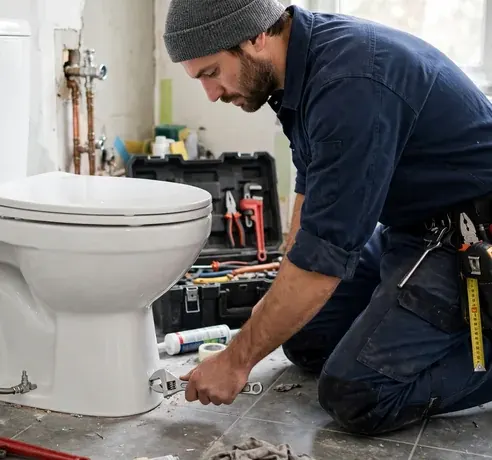
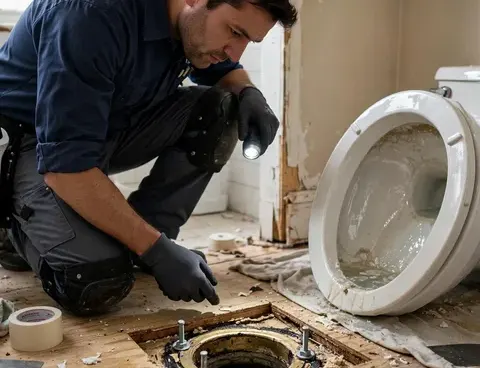
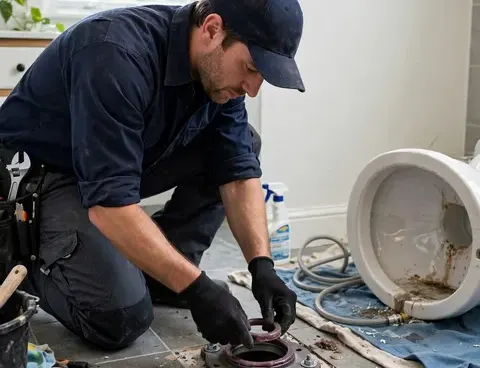
Below the tank sit the parts that cannot be reached without lifting the toilet: the tank-to-bowl gasket (plumbers also call it the spud washer) between tank and bowl, the wax ring that seals the toilet to the floor drain, the closet bolts that hold the toilet down, and the toilet flange, the collar screwed to the floor that the bolts grip.
The stamp inside the tank
Do universal toilet repair kits fit all toilets?
No. They fit most standard two-piece toilets. Pressure-assist models, many one-piece toilets, and toilets with 3-inch flush valves need parts made for them. The brand and year stamped inside your tank tell you which group yours falls in.
What is the most common part to fail in a toilet tank?
The flapper. Its rubber hardens and warps with age and water minerals, and then it leaks slowly into the bowl. The toilet refills a little at a time, all day, and the water bill shows it before you hear it.
The maker stamped the brand and the year in the porcelain inside the tank, and many tanks carry a model number too. That stamp decides which parts fit. Kohler, Toto, American Standard, Gerber and Mansfield all use their own sizes in places, and older models use parts that no modern kit holds. A photo of the stamp helps a technician arrive with the right parts the first time.
What a universal repair kit holds
A universal toilet repair kit is a box of the wear parts for the tank:
- One fill valve, adjustable in height to suit most tanks
- One flapper, usually 2-inch
- Sometimes a flush valve or a flush valve seal
- A refill tube and clips
- Washers, nuts and a new lift chain
Fluidmaster and Korky are the two makes seen most often, and full kits built around the Fluidmaster 400A fill valve are common. Universal means the kit fits most standard toilets. It does not mean every toilet. Pressure-assist toilets, one-piece low tank models, and older 3-inch flush valves all need their own parts.
The 2-inch and 3-inch flapper split
This is the mismatch that wastes the most time. Most flush valves take a 2-inch flapper. Many newer and some older brand toilets take a 3-inch flapper, which looks close enough on the shelf to fool anyone. The flapper has to match the flush valve opening at the base of the tank. A flapper that is the wrong size will leak from the day it goes in.
Full guides: Toilet Flapper Guide and Toilet Fill Valve Guide
When tank parts are the whole story
A parts swap covers the fault when the porcelain is sound and the worn parts are inside the tank:
- The toilet runs or phantom flushes, and the dye test points at the flapper
- The tank fills slowly, or the fill valve hisses and will not shut off cleanly
- The handle or chain is broken or worn
- The parts are old and the whole tank is due a rebuild in one go
Guides for the under-toilet parts: Wax Rings, Seals and Flanges and Toilet Seats and Toilet Types
When a kit is not enough
A kit is not the answer when:
- Water appears at the base. That is the wax ring or the flange, under the toilet. No tank kit touches it.
- The toilet rocks. Rocking means closet bolts, flange, or floor trouble. Tightening the bolts harder cracks the porcelain foot.
- The bowl or tank is cracked. Porcelain cannot be patched. A dye test in a cracked bowl shows colour seeping through the crack itself.
- The flush valve seat is pitted or warped. A new flapper cannot seal against a bad seat, so the running comes straight back.
- The shut-off valve will not close. A seized angle stop has to be dealt with before any tank work starts.
If you hit one of those lines and you are in Fountain Valley or a nearby city, call Toilet Repair Fountain Valley at +1 (657) 359-9352. We are open 24/7, and the call can start with talking the problem through before anyone comes out.
Related pages
Frequently asked questions
How do I know which kit to buy?
Three facts decide it: the brand and year stamped inside the tank, the size of the flush valve opening (2-inch or 3-inch), and the height of the overflow tube, which sets the fill valve. A technician matches the kit to those three before anything is fitted.
Can I replace tank parts without removing the toilet?
Flappers, fill valves, handles and chains are all tank-in-place work, changed from above with the toilet where it stands. The flush valve and tank-to-bowl gasket need the tank lifted off, and the wax ring and flange need the whole toilet lifted.
My new flapper still leaks. What went wrong?
Three usual causes: the chain is set too short and holds the flapper up, or too long and slips under it; the flapper is the wrong size for the flush valve; or the flush valve seat is pitted, so no flapper can seal on it.