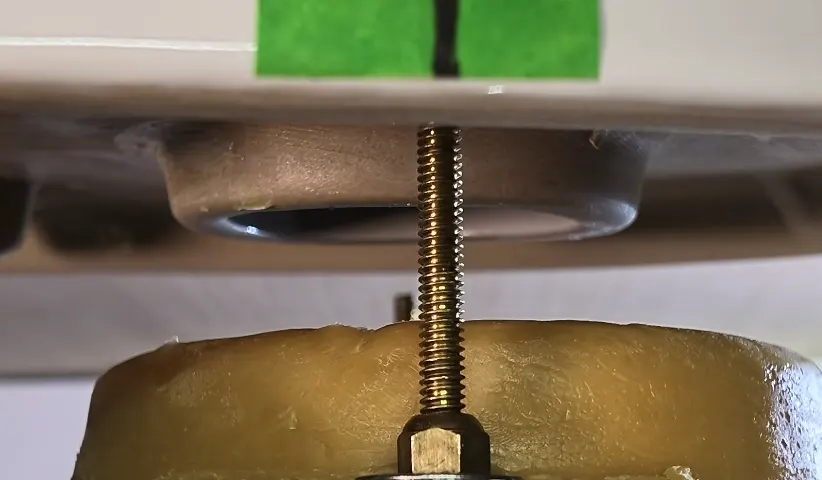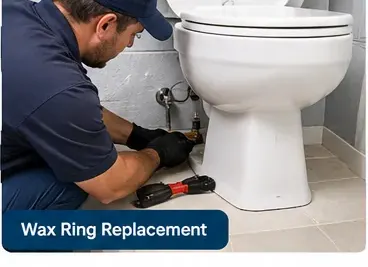
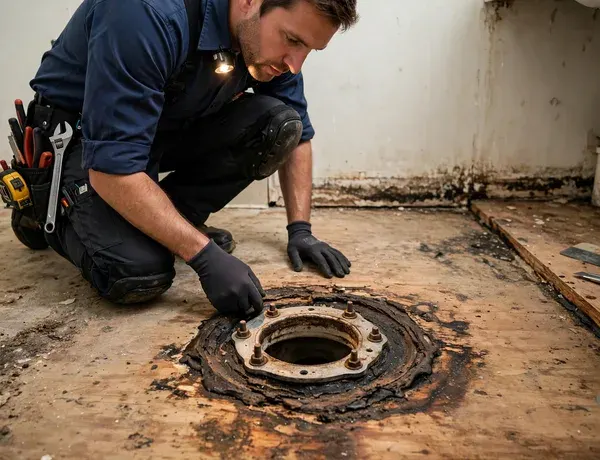
Every other part in a toilet can be reached with the lid off. These parts cannot. The wax ring, the seals and the toilet flange live under the toilet, between the porcelain and the floor drain. They do two jobs: seal the waste path so water and sewer gas stay in the pipe, and anchor the toilet so it sits still. When they fail, the signs are water at the base, a toilet that rocks, a sewer smell in the bathroom, or flooring that feels soft around the toilet.
The wax ring
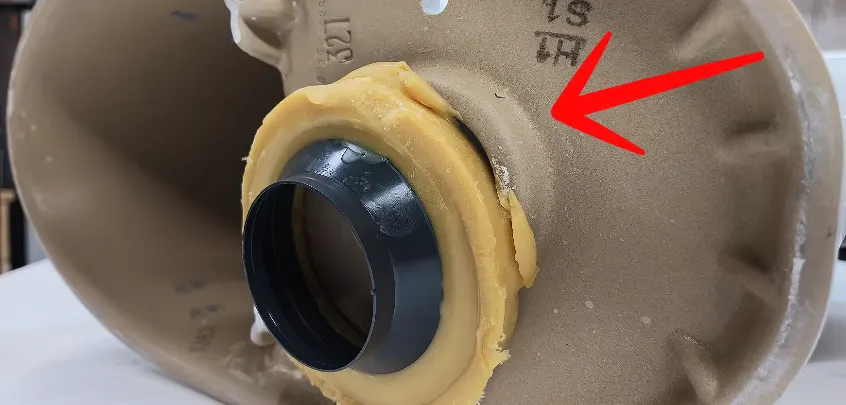
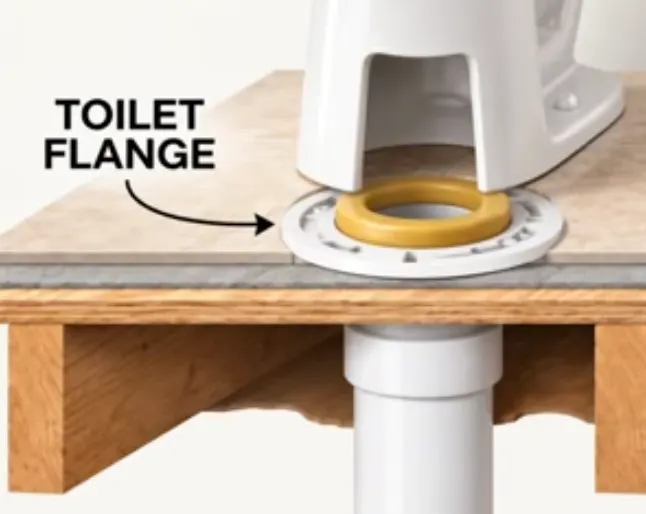
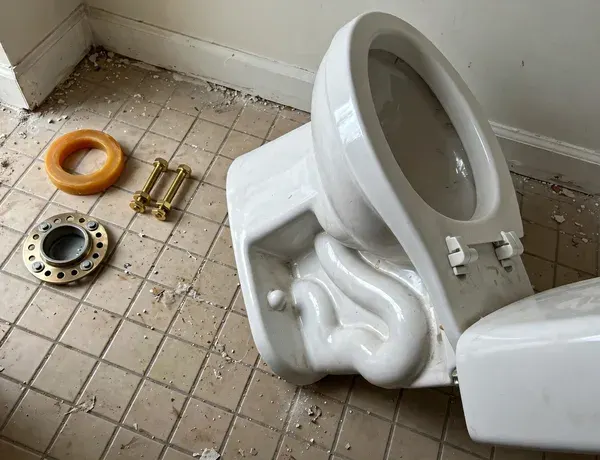
A wax ring is a ring of soft wax, often with a plastic funnel built in, that sits on the flange before the toilet is lowered onto it. The weight of the toilet squashes the wax into every gap between the toilet outlet and the flange, and that squash makes the seal.
Facts that matter:
- Wax seals once. It does not spring back. If a toilet is lowered onto a wax ring and then lifted again to adjust anything, the seal is disturbed, and a new ring goes in. A ring costs little. A rotted bathroom floor costs a great deal more.
- Wax rings are never stacked. Two rings squashed together can slide and leave a gap. If one standard ring is not enough, the flange height is the problem to fix, or a single jumbo ring is the right part.
- Chemicals can attack wax. Some drain and unclogging products warn against use in toilets with wax seals.
- Wax is not the only choice any more. Wax-free rubber seals exist and suit some floors and flanges well. See the next section.
Wax-free rubber seals
How do I know if my wax ring is leaking?
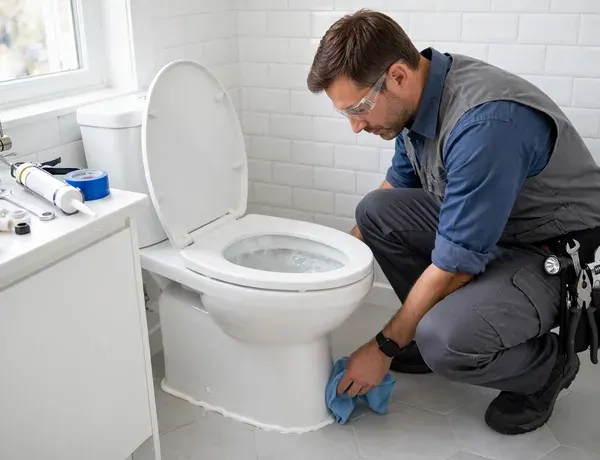
Water pooling at the base, a sewer smell near the floor, a toilet that rocks, or flooring that feels soft or shows stains around the toilet. The leak runs where you cannot see it, into the floor, so treat the signs early.
Can I reuse a wax ring if I lift the toilet for another job?
No. Once wax has been squashed, it does not spring back. Any time the toilet comes up, a new ring goes down.
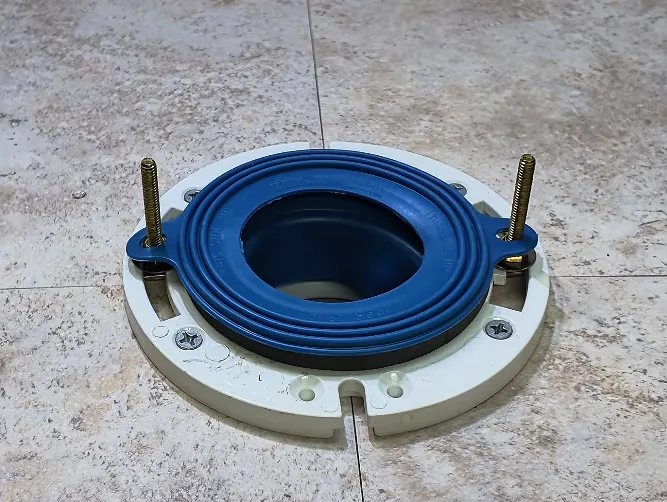
A rubber seal does the same job with a shaped rubber or foam ring instead of wax. Points in its favour: it can be repositioned during fitting on some models, it is cleaner to handle, and it suits some flange heights better. Points to watch: not every rubber seal fits every toilet or every flange height, so the maker's fit list decides. And a closet auger (a toilet snake) can damage a rubber seal as it passes in and out. Where a toilet has a rubber seal and a deep clog, that is worth knowing before any auger work starts.
Jumbo rings and flange height
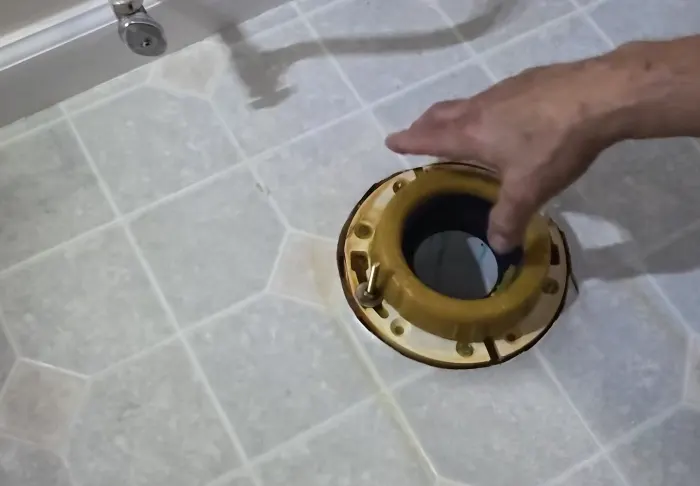
The flange is the collar fixed to the floor that the toilet bolts into. Its top sealing surface should sit about 1/4 inch above the finished floor. That height lets a standard wax ring squash to the right thickness.
Floors change. New tile or flooring laid over the old floor can leave the flange flush with the floor, or below it. A flange that sits a little low can sometimes be handled with the right seal, including a jumbo (extra thick) wax ring. A flange that sits well below floor level, or one that is cracked, loose or corroded, needs flange work, not a taller stack of wax. With the height right, the seal is simple. With the height guessed at, the leak comes back under a toilet nobody can see beneath.
The flange, and repairing it
The flange holds the closet bolts, and the closet bolts hold the toilet still. Flange faults show up as:
- A toilet that rocks even with the bolts firm (rocking is never cured by tightening harder; the porcelain foot cracks first)
- Bolts that spin or pull out, because the slot they sit in has broken
- Water at the base with a sound wax ring, because the flange sits too low or is cracked
A flange repair ring is a metal ring that fits over a damaged flange and gives the bolts a sound slot to grip. It fixes a flange whose slots have broken but whose body and height are still right. A flange that is cracked through, badly corroded, or set at the wrong height needs replacement, which can mean cutting into the drain pipe below. That is the line between a reset and drain work.
How a toilet is set back down
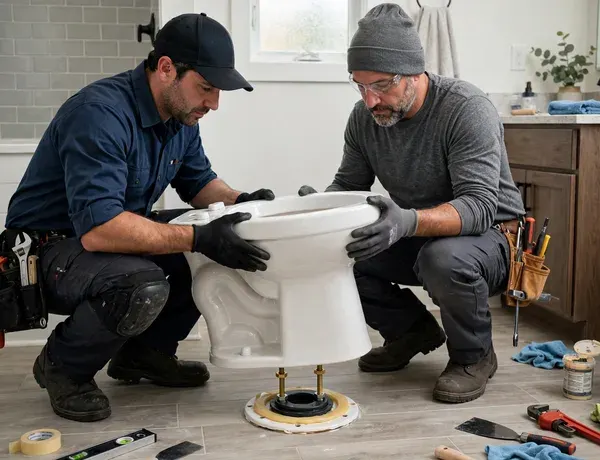
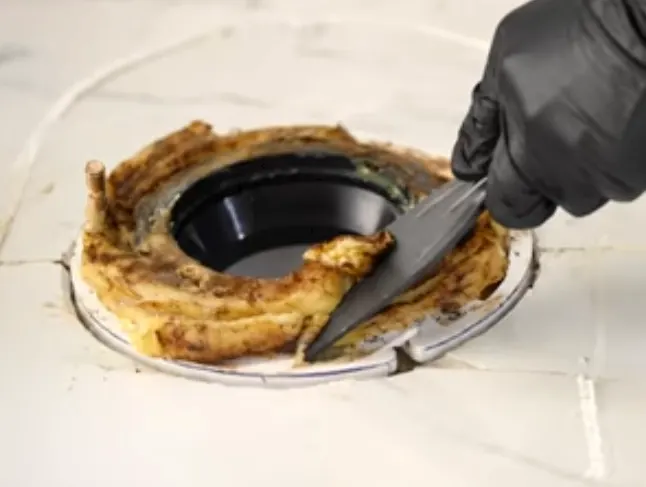
Setting a toilet back is a sequence, and each step protects the seal. The old wax is scraped off the flange and the toilet outlet, and the flange and the floor around it are checked: soft or water-damaged wood is repaired, not covered up. While the toilet is off, the open drain is plugged with a rag or a cup to keep sewer gas out of the room, and the plug comes out before the toilet goes down.
The closet bolts sit in the flange slots, opposite each other. A washer and nut fixed to the flange holds each bolt upright while the toilet is lowered, a surer method than the plastic retainers that fall over at the wrong moment. The new ring goes on the flange or the toilet outlet as its maker directs. Then the toilet comes straight down onto the bolts, with no sliding and no rocking into place, because sliding smears the wax and breaks the seal being made. It is seated with steady, even pressure, and the washers and nuts are tightened a little at a time, side to side, with a short wrench: snug holds a toilet, force cracks it. Long bolts are trimmed, the caps go on, the supply line is reconnected, and the fitting is tested. Every connection is felt with a dry hand, and a dry paper towel is left under the connections for a day to catch any slow drip.
Lifting a toilet is the heaviest work on this site, a two-person lift with real weight in awkward porcelain. If the flange needs more than a repair ring, the floor is soft, or the toilet will not sit still after a careful reset, call Toilet Repair Fountain Valley at +1 (657) 359-9352. Open 24/7. Related parts reading: Toilet Parts and Repair Kits
Related pages
Frequently asked questions
Is a wax ring or a rubber seal better?
Both seal well when they match the flange height and the toilet. Wax is the long-used standard and is unforgiving of repositioning. Rubber can be repositioned on some models and is cleaner to fit, but it must match your flange, and augers can damage it. The right match matters more than the material.
My flange is below floor level after new tile. What now?
A small gap can suit a jumbo ring or the right rubber seal. A flange well below the floor, or a damaged one, needs a repair ring, a flange extender fitted properly, or flange replacement. Stacking standard wax rings is not the fix.
The toilet rocks but the bolts are tight. What is wrong?
Either the flange slot holding a bolt is broken, so the bolt cannot grip, or the floor under the toilet has softened, or the flange itself is cracked. Tightening harder will crack the porcelain before it fixes any of those.
How to tell if a wax ring is leaking?
The wax ring leak symptoms are water pooling around the base of the toilet, a sewer smell near the floor, a toilet that rocks when you sit on it, and flooring that feels soft or looks stained around the base. The ring itself sits under the toilet, so a technician confirms the leak by lifting the toilet and checking the ring and the flange.
Do wax rings go bad?
Yes. A wax ring can lose its seal as it ages, and a rocking toilet can break the seal. Wax does not spring back once it has been squashed, so a new ring goes down every time a toilet is lifted, even when the old ring looks fine.
Can a bad wax ring cause flushing problems?
Not by itself. The wax ring seals the bottom of the toilet to the flange, and a bad one causes leaks and sewer smells at the base. The flush is run by the tank parts: the flapper, the flush valve and the fill valve. If a toilet also flushes badly, the cause is usually in the tank, not the ring.
What are the toilet wax ring sizes?
Wax rings come in standard and jumbo sizes. The jumbo ring is thicker, and it suits a flange that sits lower, for example after new tile is laid over the old floor. The right choice follows the flange height: the flange should sit about a quarter inch above the finished floor.