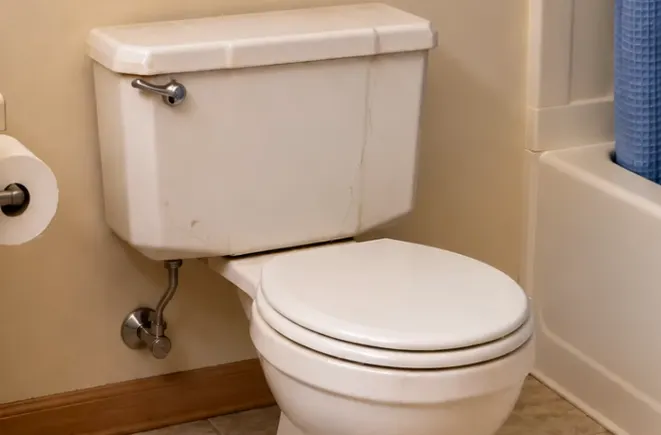
The flush itself is fine. The tank fills, the water noise runs its course, and just as the fill valve shuts, there is a bang. Sometimes a single thud in the wall, sometimes a short burst of knocking that rattles a picture frame. Then silence, until the next flush ends the same way. That bang has a name, water hammer, and it is one of the few plumbing sounds that describes real force moving through your pipes. This page explains it in plain words: what it is, why a toilet triggers it, and why a sound that seems harmless deserves more respect than it gets.
What water hammer actually is
Water moving through a pipe has weight and speed, and it does not like stopping suddenly. When a valve closes fast, the moving column of water slams to a halt and its energy has nowhere to go, so it turns into a pressure wave that bounces back through the pipework. That wave is the bang you hear, and the shudder you sometimes feel in the wall. Think of a line of people running into a closed door: the ones at the back keep arriving after the front has stopped. The faster the water was moving and the faster the valve closes, the harder the slam.
Why the toilet is the usual trigger
Is water hammer dangerous?
Not in a single event. The risk is cumulative: thousands of pressure spikes over the years loosen joints and supports and wear valves. It is a slow harm with a loud announcement.
Why does only my toilet cause it and not the taps?
The fill valve closes quickly and completely at the end of every fill, and it does so many times a day. Taps are usually closed by hand, gradually, which lets the water slow down instead of slamming to a stop.
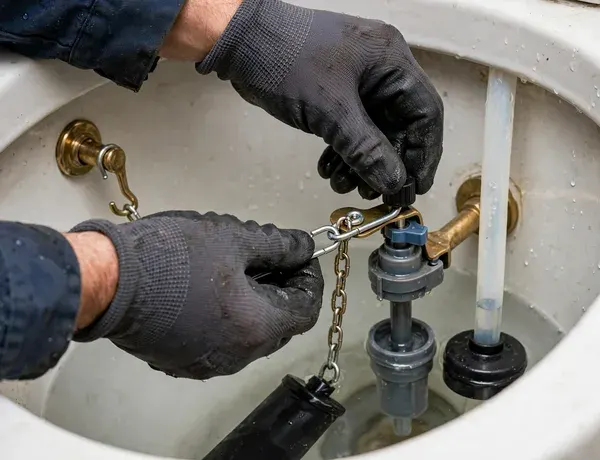
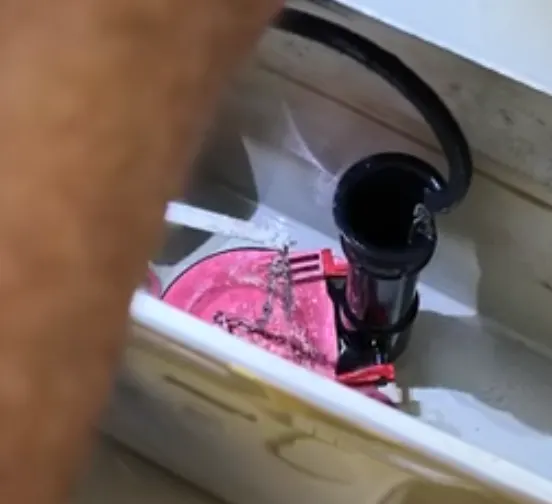
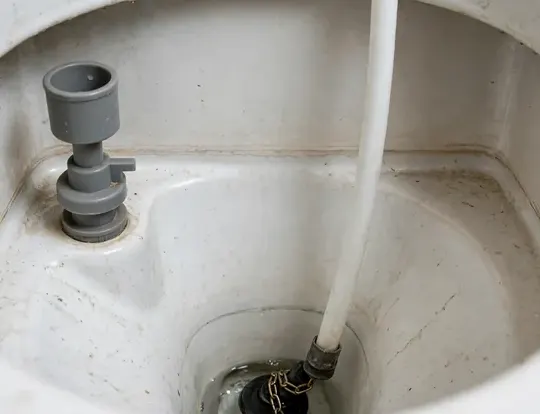
Plenty of valves close in a house, but the toilet fill valve is a frequent culprit for two reasons. It closes at the end of every fill, several times a day, so even a mild hammer gets heard often. And modern fill valves are designed to shut positively and quickly, which is good for stopping water cleanly and exactly the behaviour that produces a sharp stop. An ageing valve can make it worse, fluttering or snapping shut unevenly in a short burst rather than one clean bang. High water pressure loads the dice further, because faster water carries more energy into the stop. The wider family of toilet noises is gathered on My Toilet Is Making Noises It Should Not Make.
What the bang can do over time
One bang does no damage. Ten thousand bangs are a different account. Every hammer sends a pressure spike through joints, connections and the valves of other appliances, and pipes that are free to move will bang against whatever holds them, loosening supports a fraction at a time. The long term costs are the unglamorous ones: joints that begin to weep years earlier than they should, supply line connections worked loose, and valves worn by shocks they were not built to absorb daily. The sound is the warning. It is simply easy to get used to, which is the real risk.
What a technician checks
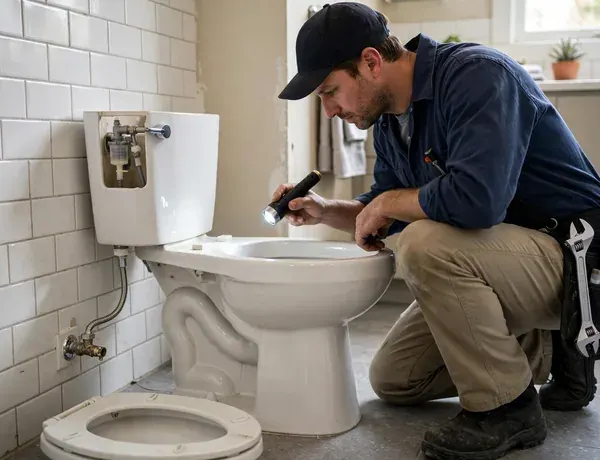
The first question is whether the hammer truly starts at the toilet or is merely heard there, because sound travels through pipework and the loudest room is not always the source. A toilet led hammer is then read alongside the fill valve's condition: how it shuts, and whether it flutters. Depending on what is found, the answer may be a valve matched better to the home, attention to pipe supports where pipes are free to strike, or a small arrestor fitted at the right point to absorb the shock. Chasing the bang by changing parts at random is how this fault eats money; the check comes first.
When to treat it as urgent
Water hammer on its own is a book it in fault, not a tonight fault. It moves up the list if it arrives with new symptoms: a bang suddenly much louder, leaks at connections, or hammer starting at several fixtures at once, which can mean the home's pressure has changed.
If your toilet ends every fill with a bang, the pipes are asking for attention while the fix is still small. To have it checked, call Toilet Repair Fountain Valley at +1 (657) 359-9352. Open 24/7.
Related pages
Frequently asked questions
Will the bang damage the toilet itself?
The porcelain is not the concern. The stress lands on the supply line connection, the fill valve, and the pipework and joints in the wall.
Can high water pressure be the real cause?
It is often a partner in the fault. Higher pressure means faster water and a harder stop. If hammer appears at several fixtures around the same time, pressure is one of the first things a technician will want to check.