Almost every toilet in Fountain Valley is built one of two ways. A two-piece toilet is made as the name says: a separate tank that bolts down onto a separate bowl, the design most homes have had for a century. A one-piece toilet is cast as a single unit, tank and bowl in one continuous piece of porcelain. Neither is simply better. They differ in how they are cleaned, how they are moved, where they can leak, and how a repair reaches their parts, and those differences are what this page lays out.
The joint is the whole story
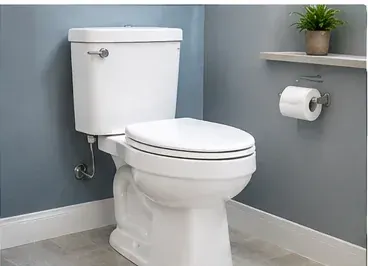
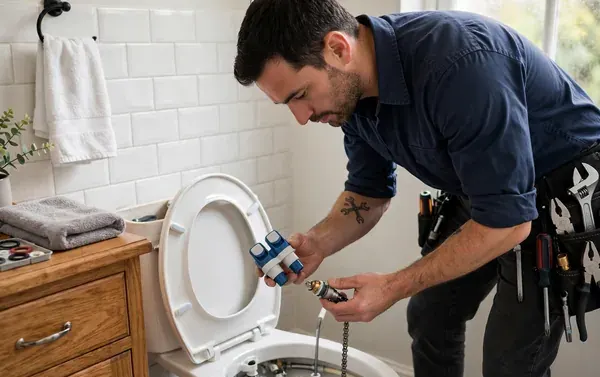
The defining difference is the connection between tank and bowl. On a two-piece toilet, that connection is a joint: bolts pass through the tank, and a large sponge gasket seals the opening where water passes from tank to bowl. Joints can leak, and this one does, in time. The gasket ages, the bolts corrode, and water begins to weep between the tank and the bowl, often only during a flush, which is why the fault hides for months. That repair has its own page: Tank-to-Bowl Gasket Replacement in Fountain Valley, CA.
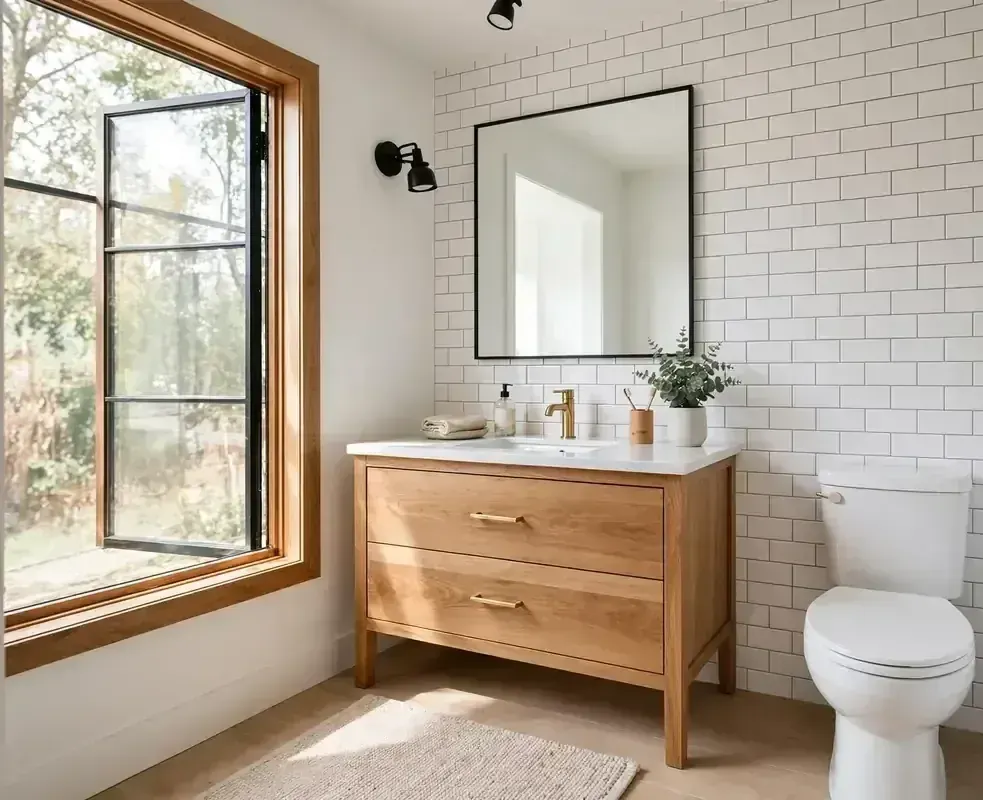
A one-piece toilet has no such joint, because there is nothing to join. An entire category of leak simply does not exist on it. When a one-piece toilet puts water on the floor, the cause sits elsewhere: the base seal, the supply connection, or a crack, and the diagnosis goes straight to those.
Cleaning and daily life
Which is better, one-piece or two-piece?
Neither in general. One-piece removes the tank-to-bowl leak point and cleans more easily. Two-piece is lighter to install, easier to source, and sometimes allows a tank-only replacement. The right choice depends on the bathroom and the budget.
My two-piece toilet leaks between the tank and the bowl. Is that serious?
It is the classic two-piece fault: the gasket and bolts at the joint have aged. Left alone it weeps more over time and can damage the floor below. It is a defined repair with its own page on this site.
The one-piece design is smoother. Its sides run in one curve from tank to floor, with no seam at the tank joint and fewer ledges where dust and grime collect, which is why one-piece toilets are popular in bathrooms that get cleaned often and in homes where hygiene drives the choice. The two-piece toilet has the seam, the bolt caps, and the shadowed area behind the tank that everyone who cleans a bathroom knows well.
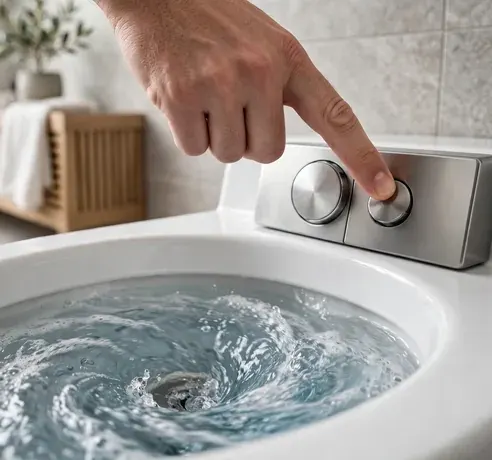
Inside the bowl, the two constructions flush the same ways. Either can carry a flapper, a canister, or a dual-flush mechanism, and either is affected by Fountain Valley's hard water at 195 ppm in the same way: scale in the rim jets weakens any flush over the years. Construction changes the outside and the joint, not the physics of the flush.
Weight, handling, and fitting
A one-piece toilet is one heavy object. It is awkward to carry, needs two people to set safely, and if any part of the porcelain is damaged, the whole unit is damaged. A two-piece toilet travels and installs in two lighter halves, which makes it the easier fit in tight bathrooms, upstairs rooms, and the narrow halls of the city's older homes, where the median house dates to 1972 and bathroom doors were not drawn generously.
This also shapes replacement thinking. Swapping a two-piece for a two-piece in the same footprint is the most straightforward change there is. Moving to a one-piece is equally possible in most bathrooms, but the unit's weight and size are planned for, and what a full replacement involves is covered on New Toilet Installation and Replacement in Fountain Valley.
Repair access
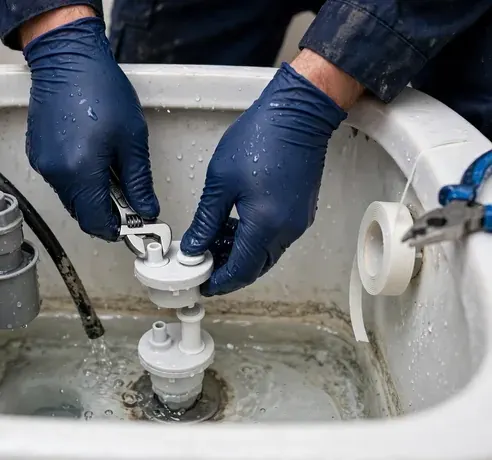
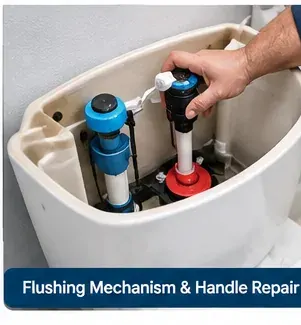
Once installed, the inside story is closer than people expect. Both designs hold the same families of parts: fill valve, flapper or canister, flush handle or buttons, and both are repaired through the open tank. The tank-to-bowl joint is the one repair that exists only on the two-piece, and there is a flip side to it: on a two-piece, a damaged tank alone can in principle be replaced without disturbing the bowl and its floor seal, while a one-piece with a cracked tank is a whole new toilet. In practice, matching a new tank to an old bowl is not always possible, because models change, but the option exists only for the two-piece.
Height and shape choices cut across both constructions. Taller comfort height bowls, covered on Comfort Height Toilets, and the wall-hung design, covered on Wall-Hung Toilets, are separate decisions from piece count, and each comes in its own repair profile.
Which suits which bathroom
For a busy family bathroom where cleaning effort matters and the budget allows, the one-piece earns its place and removes a leak point permanently. For rentals, second bathrooms, and straightforward like-for-like replacements, the two-piece remains the practical default: easier to move, easier to source, and its one extra leak point is a known, repairable gasket rather than a mystery. In commercial settings the same logic applies, and restrooms that see heavy rotation usually favor the design local parts support best, a theme that runs through Commercial Toilet Repair in Fountain Valley work as well.
Cost of the toilet itself, and what drives it, belongs to the buying conversation; this site does not publish prices, and a technician or supplier will quote for a specific model. What can be said here is that the construction choice does not change the water economics: any modern unit flushes at the California standard of 1.28 gallons or below, old two-piece antiques using 3.5 to 7 gallons are the expensive ones to keep, and a qualifying replacement of a 1.6 gallon or larger toilet with a 1.1 gallon or less model can draw the $40 SoCal Water$mart rebate.
Whether you are choosing between the two constructions or living with a leak at the joint of the one you have, call Toilet Repair Fountain Valley at +1 (657) 359-9352. Open 24/7, and the price is confirmed before any work begins.
Related pages
Frequently asked questions
Are one-piece toilets harder to repair?
The internal parts are the same families and are reached the same way through the tank. The difference is the porcelain: damage to any part of a one-piece unit means replacing the whole toilet.
Can I switch from two-piece to one-piece?
In most bathrooms, yes. The floor flange and water supply are in the same places. The one-piece unit is heavier and needs planning to move and set, which an installer handles as part of the job.
Does one-piece flush better than two-piece?
Not by construction. Flush performance comes from the flush system and the bowl design, not from whether the tank is cast with the bowl. Both come in weak and strong versions.